AI Researcher · Korea University

Building intelligence that can perceive, adapt, and collaborate.

I am an integrated M.S.–Ph.D. researcher in Artificial Intelligence at Korea University. My work connects neural signals, embodied systems, and interpretable machine learning to make human–AI collaboration more adaptive and trustworthy.

My research spans Physical AI, brain–computer interfaces, and explainable AI. I am particularly interested in systems that learn from implicit human feedback and translate it into safer real-world behavior.

Explore my research Discuss collaboration →

Research focus

01

Physical AI

Embodied agents that learn to operate safely in dynamic environments with humans in the loop.

02

Brain–Computer Interfaces

Robust neural decoding, cross-subject adaptation, and multimodal interfaces grounded in EEG.

03

Explainable AI

Counterfactual methods that reveal why fine-grained models fail and how their decisions can improve.

Selected publications

2026

NeuroLex: A Lightweight Domain Language Model for EEG Report Understanding and Generation

Kang Yin, Hye-Bin Shin

14th International Winter Conference on Brain-Computer Interface (BCI), Accepted Paper

A compact language model adapted to clinical EEG reporting for polishing, summarization, terminology QA, and future EEG–language systems.

2025

Towards Fine-Grained Interpretability: Counterfactual Explanations for Misclassification with Saliency Partition

Lintong Zhang*, Kang Yin*, Seong-Whan Lee

IEEE/CVF Conference on Computer Vision and Pattern Recognition (CVPR)

A counterfactual framework that explains fine-grained misclassification at both object and part levels using saliency partition.

2025

Semantic Prioritization in Visual Counterfactual Explanations with Weighted Segmentation and Auto-Adaptive Region Selection

Lintong Zhang, Kang Yin, Seong-Whan Lee

Neural Networks

A semantic-prioritized counterfactual framework that improves the relevance and efficiency of region replacement.

2025

EEG-based Multimodal Representation Learning for Emotion Recognition

Kang Yin, Hye-Bin Shin, Dan Li, Seong-Whan Lee

13th International Winter Conference on Brain-Computer Interface (BCI)

A flexible representation-learning framework that fuses EEG with video and audio for affective brain–computer interfaces.

2024

GITGAN: Generative Inter-subject Transfer for EEG Motor Imagery Analysis

Kang Yin, Elissa Yanting Lim, Seong-Whan Lee

Pattern Recognition

An unsupervised subject-adaptation framework that prioritizes high-quality source EEG data while preserving the target distribution.

View all publications →

Selected projects

Colored objects moving through a simulated 3D environment

2026

Belief-Aware Oracle Particle Dynamics

A belief-aware, object-centric dynamics model that learns multiple plausible 3D futures from structured object-state histories.

View project →
Closed-loop neuroadaptive embodied-agent system

2025

Neuroadaptive Oversight for Embodied Agents

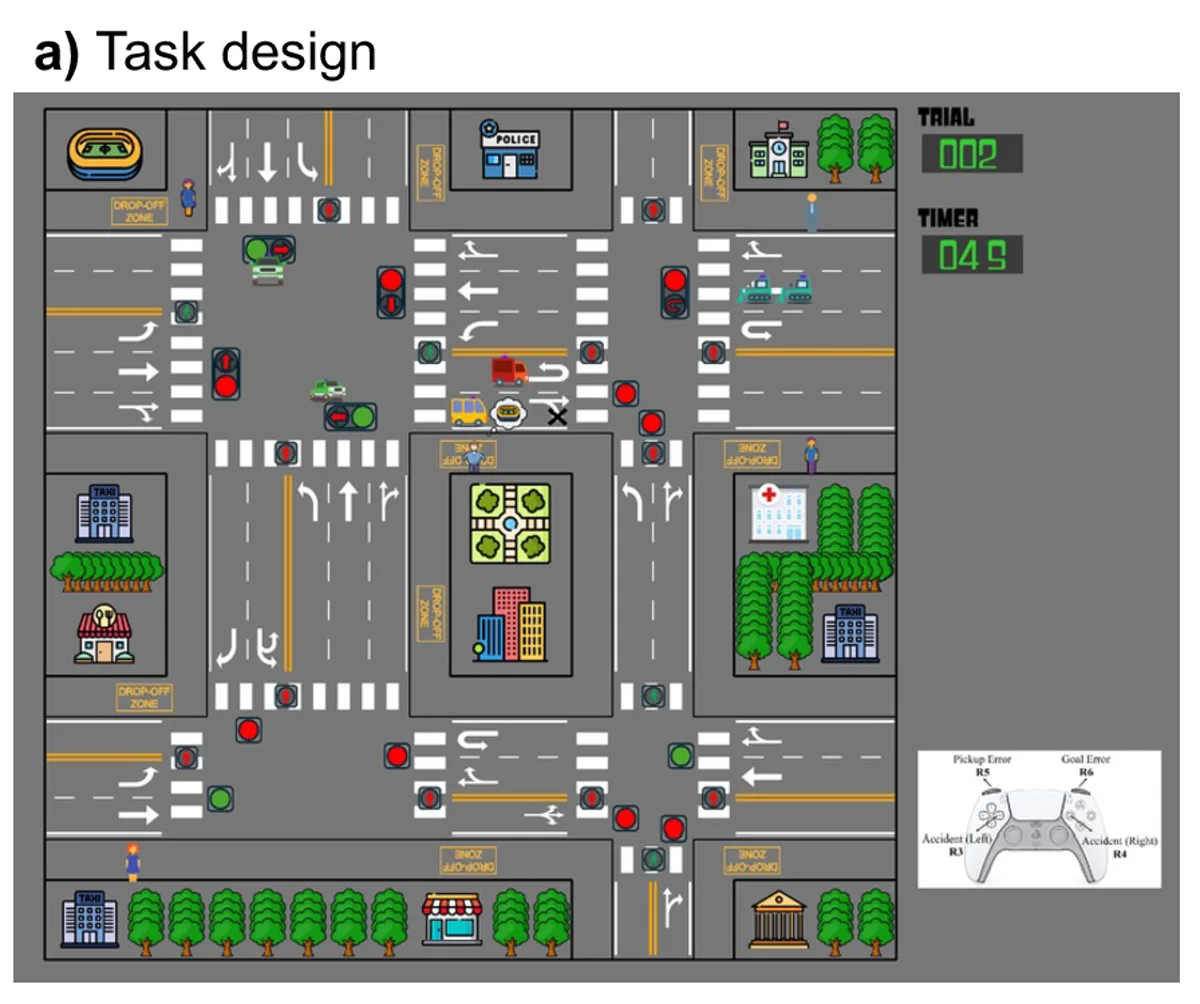
A closed-loop human–AI system that decodes implicit neural error signals and adapts multimodal cues for safer embodied autonomy.

View project →
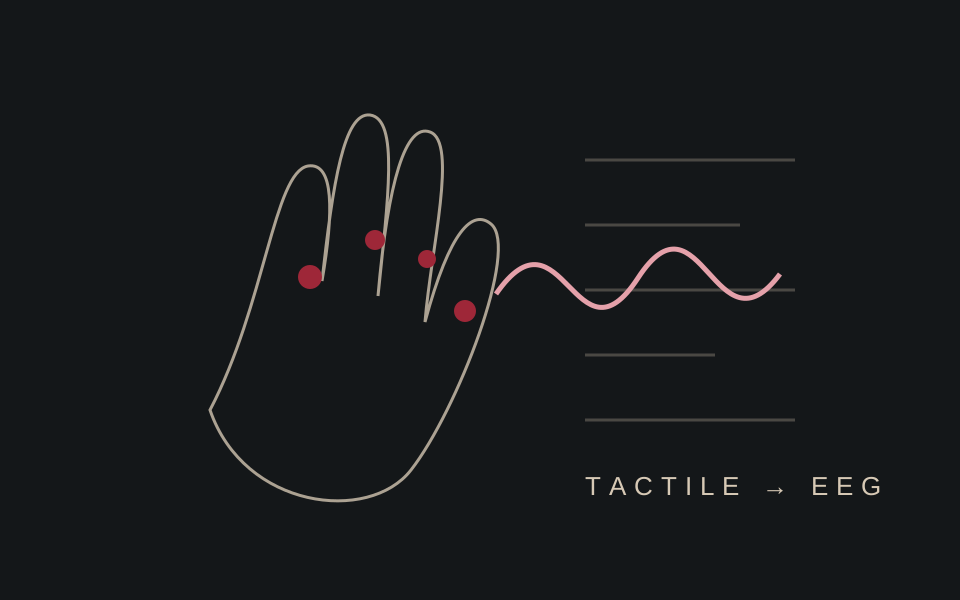
MetaSkin tactile decoding concept

2025

MetaSkin Neural–Tactile Interface

An immersive VR/AR platform for decoding multi-site tactile EEG and recognizing continuous tactile input in real time.

Motor imagery robotic arm control concept

2023

Motor Imagery Robotic Arm Control

A VR-based four-class motor-imagery BCI with real-time EEG decoding and robotic arm interaction across users.

View all projects →

Recent news

NeuroLex was accepted to the International BCI Conference 2026.

Our work on fine-grained counterfactual explanations appeared at CVPR 2025.

GITGAN was published in Pattern Recognition.

Collaboration

I welcome conversations about neuroadaptive embodied systems, EEG representation learning, explainability, and international research collaboration. Email me or explore my work on Google Scholar.